Highest horticultural quality and experience since 1897
Brassia
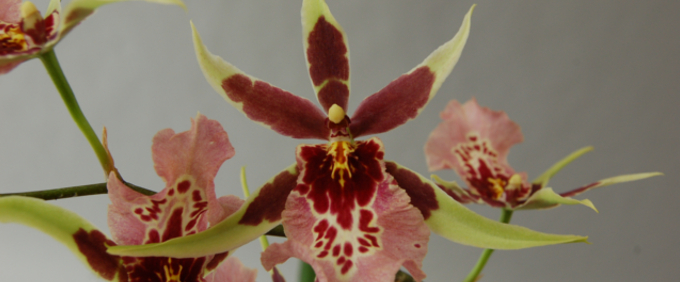
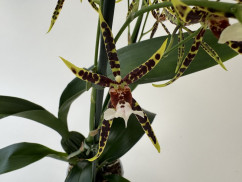
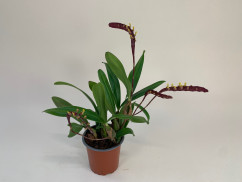
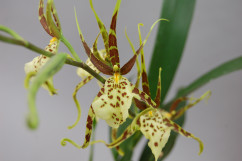
With its large, bizarre, spider-like flowers, Brassia is the epitome of an exotic orchid.
It blooms in the summer. With just under 30 species Brassia is a rather small genus. Most Brassia species are found in tropical America at altitudes up to 1500 m.
Special orchid care instructions for Brassia
To name a particularity, Brassia should be repotted regularly as their roots are particularly sensitive to waterlogging due to compacting, rotting substrate. A bright but not too hot location will do wonders for a rapid shoot growth and thus many flower spikes. It withstands up to 30 °C in the daytime during the summer. At night, the temperature should not fall below 12 °C. When pouring the classic orchid recipe applies for Brassia: Pour penetratingly, but also dry well again. Incidentally, this principle applies to almost all bulbous orchids. During plant growth fertilize every 14 days with half of the specified concentration. In winter the fertilization should be paused.
Shop By
Filter
- Price
- flower season
- light/location
- temperature
Brassia
With its large, bizarre, spider-like flowers, Brassia is the epitome of an exotic orchid.
It blooms in the summer. With just under 30 species Brassia is a rather small genus. Most Brassia species are found in tropical America at altitudes up to 1500 m.
Special orchid care instructions for Brassia
To name a particularity, Brassia should be repotted regularly as their roots are particularly sensitive to waterlogging due to compacting, rotting substrate. A bright but not too hot location will do wonders for a rapid shoot growth and thus many flower spikes. It withstands up to 30 °C in the daytime during the summer. At night, the temperature should not fall below 12 °C. When pouring the classic orchid recipe applies for Brassia: Pour penetratingly, but also dry well again. Incidentally, this principle applies to almost all bulbous orchids. During plant growth fertilize every 14 days with half of the specified concentration. In winter the fertilization should be paused.
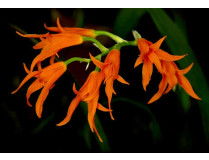
Ada aurantiaca
- flower season: winter - spring
- temperature: cool (10 - 16 °C)
- Mehr Details
Price*:
€26.90
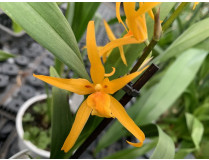
Brassada Anita (2 Rispen)
- flower season: spring - summer
- temperature: moderate (16 - 20 °C)
- Mehr Details
Price*:
€19.90

Brassada Anita (Jgpfl.)
- flower season: spring - summer
- temperature: moderate (16 - 20 °C)
- Mehr Details
Price*:
€8.90
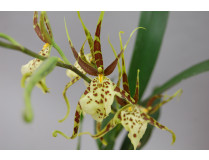
Brassia Eternal Wind 'Summer Dream' (2 Rispen)
- flower season: summer
- temperature: moderate (16 - 20 °C)
- Mehr Details
Price*:
€23.90
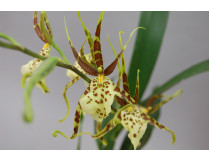
Brassia Eternal Wind 'Summer Dream' (Jgpfl.)
- flower season: summer
- temperature: moderate (16 - 20 °C)
- Mehr Details
Price*:
€7.90

Brassia giroudiana
- flower season: spring - summer
- temperature: moderate (16 - 20 °C)
- Mehr Details
Price*:
€19.90
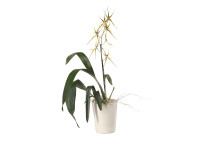
Brassia Hybride, 1 Rispe (inkl. Übertopf)
- flower season: whole year
- temperature: moderate (16 - 20 °C)
- Mehr Details
Price*:
€22.90
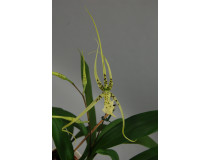
Brassia maculata
- flower season: summer - autumn
- temperature: cool - moderate (12 - 18 °C)
- Mehr Details
Price*:
€21.90
€17.90
-18 % 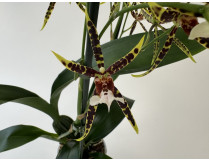
Brassia Tarantula Coral (2 Rispen)
- flower season: summer
- temperature: moderate (16 - 20 °C)
- Mehr Details
Price*:
€23.90
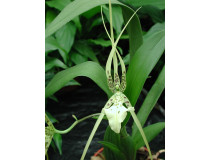
Brassia verrucosa
- flower season: spring - summer
- temperature: cool - moderate (12 - 18 °C)
- Mehr Details
Price*:
€21.90
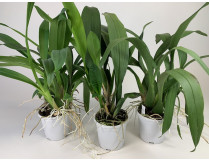
Brassia-Sortiment (3 Arten: gireoudiana, maculata, verrucosa)
- flower season: winter - spring
- temperature: cool (10 - 16 °C)
- Mehr Details
Price*:
€65.90
€50.00
-24 % 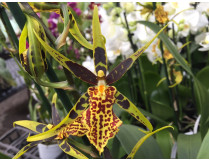
Brassidium Mystic Maze (1 Rispe)
- flower season: summer
- temperature: moderate (16 - 20 °C)
- Mehr Details
Price*:
€19.90
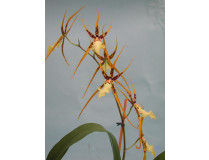
Brassidium Shooting Star 'Black Gold' (in Blüte/Knospe)
- flower season: autumn winter
- temperature: moderate (16 - 20 °C)
- Mehr Details
Price*:
€18.90
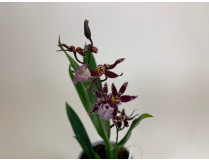
Brassidium Titanium Treasure (3-4 Rispen)
- flower season: winter - spring
- temperature: cool - moderate (12 - 18 °C)
- Mehr Details
Price*:
€22.90
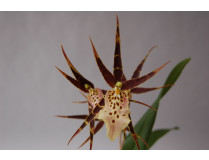
Miltassia Shelop Tolkien AM/AOS (2 Rispen)
- flower season: summer - autumn
- temperature: moderate (16 - 20 °C)
- Mehr Details
Price*:
€21.90
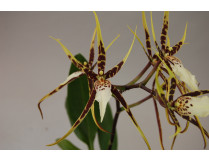
Miltassia Toscana (1 Rispe)
- flower season: summer - autumn
- temperature: moderate (16 - 20 °C)
- Mehr Details
Price*:
€16.90
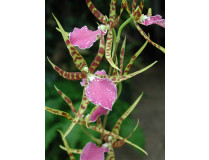
Odontobrassia Billabong 'Celle'
- flower season: summer - autumn
- temperature: moderate (16 - 20 °C)
- Mehr Details
Price*:
€18.90
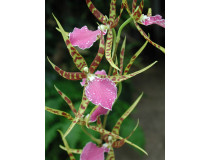
Odontobrassia Billabong 'Celle' (Jungpfl.)
- flower season: in 1 - 1 1/2 years
- temperature: moderate (16 - 20 °C)
- Mehr Details
Price*:
€9.90
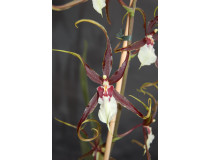
Odontobrassia Kenneth Bivin 'Santa Barbara' (1 Rispe)
- flower season: summer - autumn
- temperature: moderate (16 - 20 °C)
- Mehr Details
Price*:
€21.90
 ... to newsletter subscription
 ... to see all economy sets
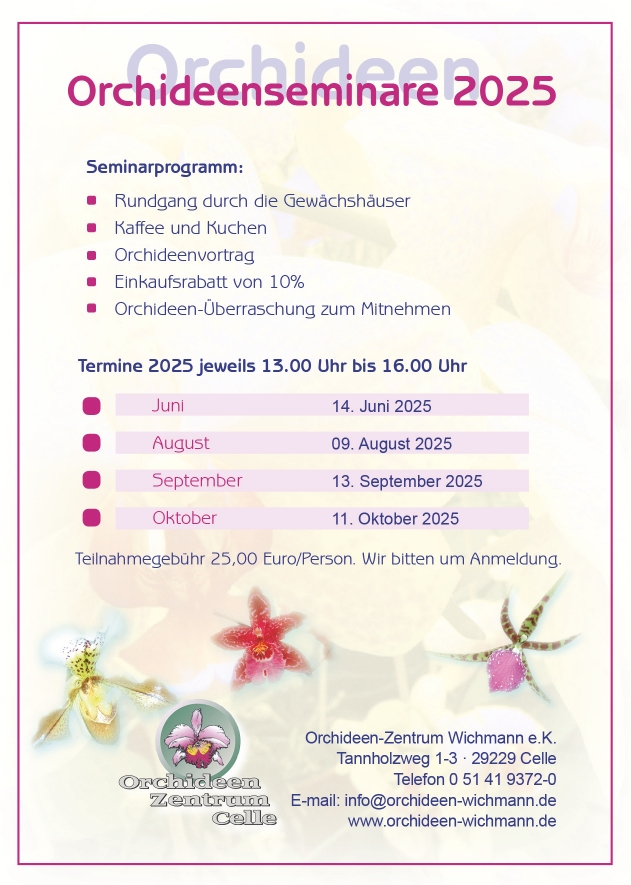
Orchideen-Zentrum Wichmann e.K.
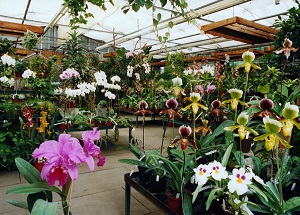
Orchideen-Gartencenter
Tannholzweg 1 - 3
29229 Celle - OT Groß Hehlen
info@orchideen-wichmann.de
| Mon | closed |
| Tue - Fri | 10 am - 5.pm |
| Sat | 10 am - 2 pm |
| So. | 10 am - 12 pm |
Free tour every first Sunday of the month at 10:00 am

News
Our Warranty
 |
 |
 |
 |