Highest horticultural quality and experience since 1897
Dendrobium
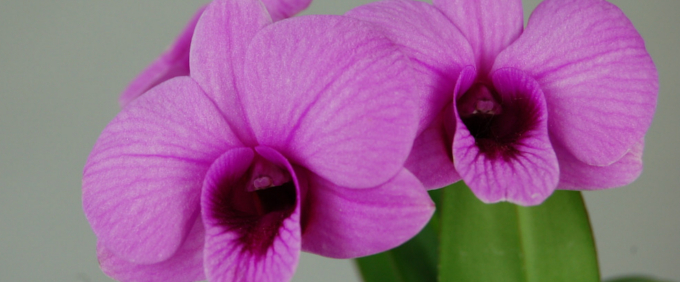
Dendrobium is probably the largest genus of orchids with around 800 species.
The variety in habit, scent and color seems almost inexhaustible. There are subspecies such as Dendrobium nobile group, kingianum group or phalaenopsis group. Nobiles, for example, have the flowers directly on the trunk, phalanopsis Dendrobium have almost right long flower panicles. Many species require a distinct period of rest in order to be able to flower richly each year or like to stand in cool locations. Most Dendrobium can be found in Australia, Indonesia, India and China.
Special orchid care instructions for Dendrobium
All Dendrobium have in common that they need a lot of light. During the shoot growth may be fertilized regularly, but always with half the specified concentration and in the dark winter months you should less water and no longer fertilize, otherwise the Dendrobium drives through. Most dendrobium can withstand temperatures of 10-12 °C. 15-20 °C are optimal. The flowering time of most Dendrobium is in autumn-winter. Phalaenopsis Dendrobium, on the other hand, tend to bloom in summer to fall.
Video zu Dendrobium (goldschmidtianum ) voll Blüte
Shop By
Filter
- Price
- flower season
- light/location
- temperature
Dendrobium
Dendrobium is probably the largest genus of orchids with around 800 species.
The variety in habit, scent and color seems almost inexhaustible. There are subspecies such as Dendrobium nobile group, kingianum group or phalaenopsis group. Nobiles, for example, have the flowers directly on the trunk, phalanopsis Dendrobium have almost right long flower panicles. Many species require a distinct period of rest in order to be able to flower richly each year or like to stand in cool locations. Most Dendrobium can be found in Australia, Indonesia, India and China.
Special orchid care instructions for Dendrobium
All Dendrobium have in common that they need a lot of light. During the shoot growth may be fertilized regularly, but always with half the specified concentration and in the dark winter months you should less water and no longer fertilize, otherwise the Dendrobium drives through. Most dendrobium can withstand temperatures of 10-12 °C. 15-20 °C are optimal. The flowering time of most Dendrobium is in autumn-winter. Phalaenopsis Dendrobium, on the other hand, tend to bloom in summer to fall.
Video zu Dendrobium (goldschmidtianum ) voll Blüte
Dendrobium abberans
- flower season: winter - spring
- temperature: moderate (16 - 20 °C)
- Mehr Details
Price*:
€16.90

Dendrobium aberrans x rhodostictum (blühstark, ohne Knospe / Blüte)
- flower season: winter - spring
- temperature: moderate - warm (18 - 22 °C)
- Mehr Details
Price*:
€21.90
Dendrobium aggregatum
- flower season: winter - spring
- temperature: moderate (16 - 20 °C)
- Mehr Details
Price*:
€23.90
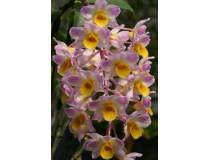
Dendrobium amabile
- flower season: spring - summer
- temperature: moderate (16 - 20 °C)
- Mehr Details
Price*:
€21.90

Dendrobium amethystoglossum
- flower season: winter
- temperature: cool - moderate (12 - 18 °C)
- Mehr Details
Price*:
€36.90

Dendrobium antenatum
- flower season: summer
- temperature: moderate - warm (18 - 22 °C)
- Mehr Details
Price*:
€28.90
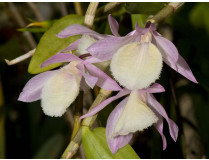
Dendrobium aphyllum
- flower season: spring - summer
- temperature: warm (20 - 24 °C
- Mehr Details
Price*:
€32.90

Dendrobium aphyllum 'album'
- flower season: spring - summer
- temperature: warm (20 - 24 °C
- Mehr Details
Price*:
€32.90
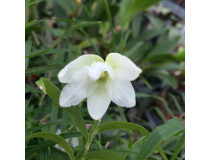
Dendrobium auriculatum
- flower season: summer - autumn
- temperature: moderate (16 - 20 °C)
- Mehr Details
Price*:
€19.90
Dendrobium auriculatum x heckouense
- flower season: whole year
- temperature: moderate - warm (18 - 22 °C)
- Mehr Details
Price*:
€27.90

Dendrobium bellatulum (Jgpfl., frisch aufgebunden)
- flower season: spring
- temperature: cool - moderate (12 - 18 °C)
- Mehr Details
Price*:
€10.90
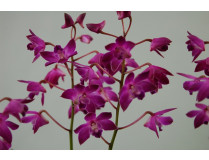
Dendrobium Berry Oda (9+ Rispen)
- flower season: winter - spring
- temperature: cool (10 - 16 °C)
- Mehr Details
Price*:
€28.90
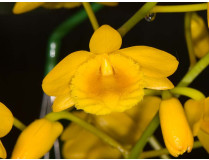
Dendrobium chrysotoxum
- flower season: winter - spring
- temperature: moderate - warm (18 - 22 °C)
- Mehr Details
Price*:
€39.90
Dendrobium Cobber x Australian Rhubarb Pie
- temperature: cool - moderate (12 - 18 °C)
- Mehr Details
Price*:
€19.90
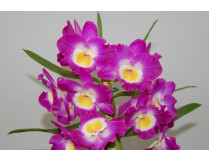
Dendrobium Comet King 'Akasuki' (2 Blütenstiele)
- flower season: winter - spring
- temperature: moderate (16 - 20 °C)
- Mehr Details
Price*:
€26.90
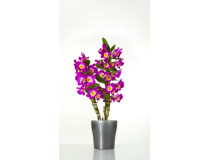
Dendrobium Comet King 'Akasuki' (2 Stiele, inkl. Übertopf)
- flower season: whole year
- temperature: moderate (16 - 20 °C)
- Mehr Details
Price*:
€30.90
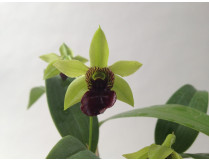
Dendrobium convolutum
- flower season: spring - summer
- temperature: warm (20 - 24 °C
- Mehr Details
Price*:
€19.90
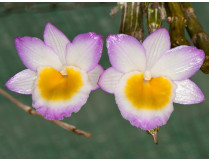
Dendrobium crepidatum
- flower season: spring
- temperature: cool - moderate (12 - 18 °C)
- Mehr Details
Price*:
€14.90

Dendrobium cuthbertsonii 'Red' (blühstark, frisch getopft)
- flower season: whole year
- temperature: cool - moderate (12 - 18 °C)
- Mehr Details
Price*:
€33.90
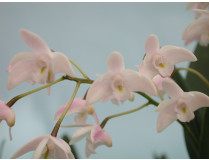
Dendrobium delicatum
- flower season: winter - spring
- temperature: cool (10 - 16 °C)
- Mehr Details
Price*:
€24.90

Dendrobium densiflorum (Jgpfl.)
- flower season: winter - spring
- temperature: warm (20 - 24 °C
- Mehr Details
Price*:
€19.90
Dendrobium farmeri 'alba'
- flower season: spring - summer
- temperature: cool - moderate (12 - 18 °C)
- Mehr Details
Price*:
€58.90
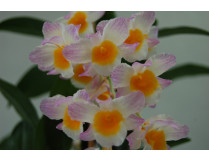
Dendrobium farmeri (Jgpf.)
- flower season: winter - spring
- temperature: cool - moderate (12 - 18 °C)
- Mehr Details
Price*:
€15.90
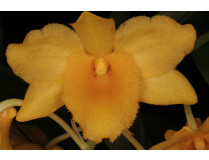
Dendrobium griffithianum
- flower season: spring
- temperature: warm (20 - 24 °C
- Mehr Details
Price*:
€32.90

Dendrobium harveyanum
- flower season: winter - spring
- temperature: cool - moderate (12 - 18 °C)
- Mehr Details
Price*:
€29.90
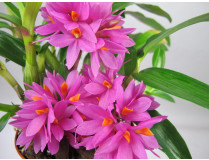
Dendrobium Hibiki
- flower season: spring - summer
- temperature: moderate (16 - 20 °C)
- Mehr Details
Price*:
€17.90
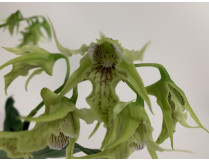
Dendrobium hodgkinsonii
- flower season: winter - spring
- temperature: warm (20 - 24 °C
- Mehr Details
Price*:
€22.90

Dendrobium infundibulum
- flower season: spring - summer
- temperature: moderate - warm (18 - 22 °C)
- Mehr Details
Price*:
€21.90
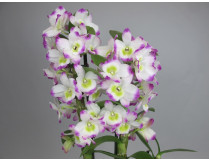
Dendrobium Irene Smile (2 Stiele)
- flower season: whole year
- temperature: moderate (16 - 20 °C)
- Mehr Details
Price*:
€26.90
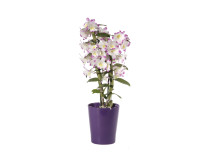
Dendrobium Irene Smile (2 Stiele, inkl. Übertopf)
- flower season: whole year
- temperature: moderate (16 - 20 °C)
- Mehr Details
Price*:
€29.90
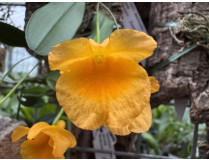
Dendrobium jenkinsii
- flower season: spring
- temperature: cool - moderate (12 - 18 °C)
- Mehr Details
Price*:
€24.90
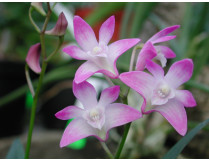
Dendrobium kingianum
- flower season: winter - spring
- temperature: cool (10 - 16 °C)
- Mehr Details
Price*:
€17.90
Dendrobium kingianum 'alba'
- flower season: winter - spring
- temperature: cool (10 - 16 °C)
- Mehr Details
Price*:
€22.90

Dendrobium linawianum
- flower season: winter - spring
- temperature: moderate - warm (18 - 22 °C)
- Mehr Details
Price*:
€21.90
Dendrobium loddigesii
- flower season: winter - spring
- temperature: moderate (16 - 20 °C)
- Mehr Details
Price*:
€27.90
Dendrobium luzonense
- flower season: whole year
- temperature: moderate - warm (18 - 22 °C)
- Mehr Details
Price*:
€16.90
What should I bear in mind when caring for Dendrobium phalaenopsis?
The fact that this orchid grows epiphytically, i.e. on trees or rocks, can be deduced directly from its name. Translated from the Greek, "dentros" means tree and "bios" means life, i.e. "living on trees". There are over 1400 Dendrobium species, which are categorised as either Dendrobium nobile or Dendrobium Phalaenopsis. Although the name suggests it, the latter are not related to the genus Phalaenopsis.
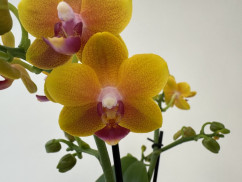
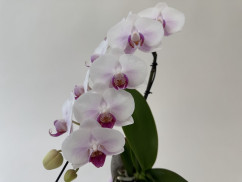
It is merely the namesake of this Dendrobium group, because outwardly Dendrobium Phalaenopsis has more in common with Phalaenopsis than with its Dendrobium nobile sisters: the butterfly-like flowers of these two orchid groups look very similar and, unlike Dendrobium nobile, grow at the tips of the flower stems instead of on the stem.
Dendrobium phalaenopsis also has a lot in common with its namesake in terms of its care requirements. It is relatively easy to care for and robust, making it suitable for orchid beginners.
What temperature for Dendrobium Phalaenopsis? Fertilise and beware of dry indoor air
This exotic beauty likes a warm environment of 20 to 25 degrees Celsius all year round.
It flowers from November to March and prefers a bright windowsill as it likes plenty of light. It usually sheds its last flowers before summer arrives. Now is also the right time to repot, as the new roots it is now forming thrive best in fresh substrate. It should be watered about once a week, but as soon as it gets colder in the autumn months it can be kept drier.
Fertiliser should no longer be applied until flowering begins. But beware: if the room air is too dry, the smallest buds may dry out. If they are sprayed daily with a little water, they will still be able to flower. After the flowering period, it is best to add half a millilitre of fertiliser to one litre of water every 14 days to provide optimum support for shoot growth.
 ... to newsletter subscription
 ... to see all economy sets
Orchideen-Zentrum Wichmann e.K.
Orchideen-Gartencenter
Tannholzweg 1 - 3
29229 Celle - OT Groß Hehlen
info@orchideen-wichmann.de
| Mon | closed |
| Tue - Fri | 10 am - 5.pm |
| Sat | 10 am - 2 pm |
| So. | 10 am - 12 pm |
Free tour every first Sunday of the month at 10:00 am

News
Our Warranty
 |
 |
 |
 |