Highest horticultural quality and experience since 1897
Vanda
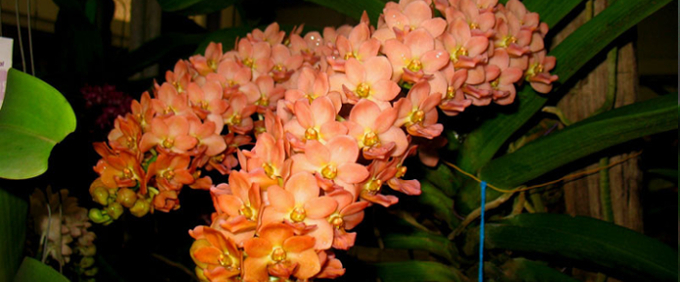
Vanda is an epiphytic plant with long aerial roots, cultivated absolutely without orchid soil.
Their natural occurrence extends from India via Thailand to the Philippines. It was discovered at the beginning of the 16th century. Their air-hungry aerial roots are not only there to cling to the growth medium but are the only way of moisturizing the plant and they are functioning like a sponge. Vanda can flower several times a year. They are very durable.
Special orchid care instructions for Vanda
They grow best in grid baskets without any plant material. Therefore, Vanda should be dipped regularly 2-3 times a week and always sprayed from time to time. Attention: Moisten only the roots and not the foliage - it is sensitive to fungal diseases. The water should be lukewarm and enriched once a month with special Vanda Tillandsia fertilizer. An always bright and warm location is crucial if you want to bring it back to life. In the summer you can hang them on a shady place in the garden. As a tip, a cultivation in a glass vase is recommended.
Shop By
Filter
- Price
- Manufacturer
- flower season
- light/location
- temperature
Vanda
Vanda is an epiphytic plant with long aerial roots, cultivated absolutely without orchid soil.
Their natural occurrence extends from India via Thailand to the Philippines. It was discovered at the beginning of the 16th century. Their air-hungry aerial roots are not only there to cling to the growth medium but are the only way of moisturizing the plant and they are functioning like a sponge. Vanda can flower several times a year. They are very durable.
Special orchid care instructions for Vanda
They grow best in grid baskets without any plant material. Therefore, Vanda should be dipped regularly 2-3 times a week and always sprayed from time to time. Attention: Moisten only the roots and not the foliage - it is sensitive to fungal diseases. The water should be lukewarm and enriched once a month with special Vanda Tillandsia fertilizer. An always bright and warm location is crucial if you want to bring it back to life. In the summer you can hang them on a shady place in the garden. As a tip, a cultivation in a glass vase is recommended.

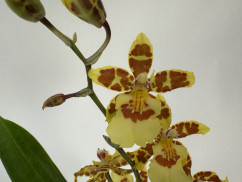
Aerides Korat Koki
- flower season: spring - summer
- temperature: warm (20 - 24 °C
- Mehr Details
Price*:
€49.90
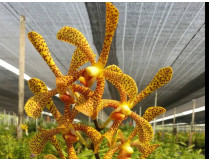
Arachnis Maggie Oei 'variegata'
- flower season: summer - autumn
- temperature: warm (20 - 24 °C
- Mehr Details
Price*:
€33.90
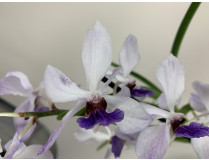
Ascocenda Bavaria Blue x Holcoglossum wangii
- flower season: summer - autumn
- temperature: warm (20 - 24 °C
- Mehr Details
Price*:
€22.90

Paraphalaenopsis labukensis x Vanda coerulescens
- flower season: winter - spring
- temperature: moderate - warm (18 - 22 °C)
- Mehr Details
Price*:
€24.90
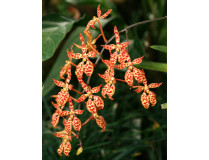
Renanthera monachica
- flower season: winter - spring
- temperature: warm (20 - 24 °C
- Mehr Details
Price*:
€21.90
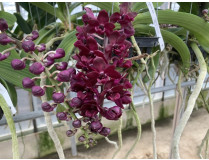
Rhynchostylis gigantea 'Red'
- flower season: autumn winter
- temperature: warm (20 - 24 °C
- Mehr Details
Price*:
€39.90
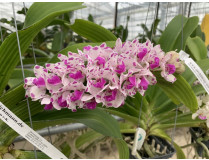
Rhynchostylis gigantea 'spots' (in Knospe / Blüte)
- flower season: autumn winter
- temperature: warm (20 - 24 °C
- Mehr Details
Price*:
€42.90

Rhynchostylis gigantea (Jgpfl.)
- flower season: autumn winter
- temperature: warm (20 - 24 °C
- Mehr Details
Price*:
€24.90
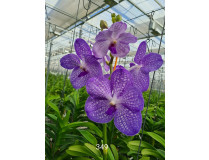
Vanda Angeli (in Blüte/Knospe)
- flower season: whole year
- temperature: warm (20 - 24 °C
- Mehr Details
Price*:
€42.90
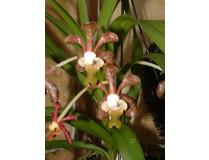
Vanda bensonii
- flower season: spring
- temperature: moderate - warm (18 - 22 °C)
- Mehr Details
Price*:
€47.90
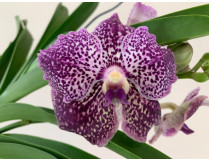
Vanda Blackberry Delight (in Blüte / Knospe)
- flower season: whole year
- temperature: warm (20 - 24 °C
- Mehr Details
Price*:
€49.90
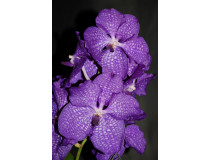
Vanda Blue Magic (in Blüte / Knospe)
- flower season: whole year
- temperature: warm (20 - 24 °C
- Mehr Details
Price*:
€42.90
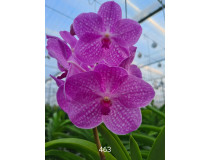
Vanda Candy Pink (in Knospe / Blüte)
- flower season: whole year
- temperature: warm (20 - 24 °C
- Mehr Details
Price*:
€42.90
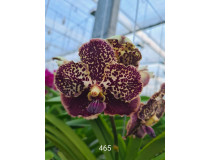
Vanda Chocolate Spotty (in Knospe / Blüte)
- flower season: whole year
- temperature: warm (20 - 24 °C
- Mehr Details
Price*:
€42.90
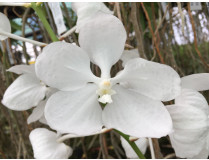
Vanda coerulea 'alba'
- flower season: whole year
- temperature: warm (20 - 24 °C
- Mehr Details
Price*:
€34.90

Vanda Dark Purple Spots (in Blüte / Knospe)
- flower season: whole year
- temperature: warm (20 - 24 °C
- Mehr Details
Price*:
€42.90

Vanda Deep Blush (in Blüte/Knospe)
- flower season: whole year
- temperature: warm (20 - 24 °C
- Mehr Details
Price*:
€49.90
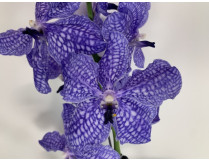
Vanda Delft Blue (in Blüte / Knospe)
- flower season: whole year
- temperature: warm (20 - 24 °C
- Mehr Details
Price*:
€42.90
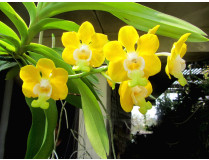
Vanda denisoniana (Jgpfl., Importpflanze)
- flower season: winter - spring
- temperature: moderate - warm (18 - 22 °C)
- Mehr Details
Price*:
€34.90
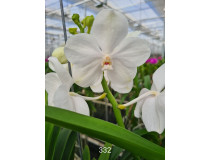
Vanda Diamond White (in Blüte / Knospe)
- flower season: whole year
- temperature: warm (20 - 24 °C
- Mehr Details
Price*:
€42.90
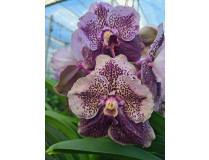
Vanda Divana Antique 'Mauve Plum' (In Knospe / Blüte)
- flower season: whole year
- temperature: warm (20 - 24 °C
- Mehr Details
Price*:
€45.90
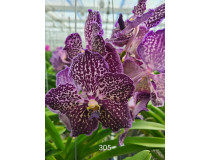
Vanda Exotic Purple (in Knospe / Blüte)
- flower season: whole year
- temperature: warm (20 - 24 °C
- Mehr Details
Price*:
€42.90

Vanda falcata x flabellata
- flower season: spring - summer
- temperature: warm (20 - 24 °C
- Mehr Details
Price*:
€28.90
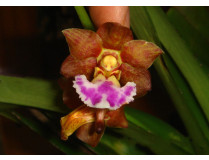
Vanda flabellata
- flower season: spring - summer
- temperature: warm (20 - 24 °C
- Mehr Details
Price*:
€42.90
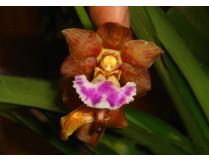
Vanda flabellata (Jgpfl.)
- flower season: spring - summer
- temperature: warm (20 - 24 °C
- Mehr Details
Price*:
€34.90
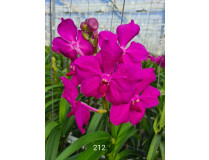
Vanda Hot Magenta (in Blüte / Knospe)
- flower season: whole year
- temperature: warm (20 - 24 °C
- Mehr Details
Price*:
€42.90
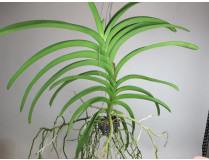
Vanda Hybride
- flower season: whole year
- temperature: warm (20 - 24 °C
- Mehr Details
Price*:
€42.90
€31.90
-25 % 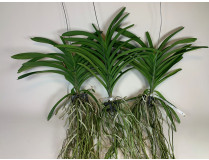
Vanda Hybride - 3er Sparset (blühstark)
- flower season: whole year
- temperature: warm (20 - 24 °C
- Mehr Details
Price*:
€128.70
€84.90
-34 % 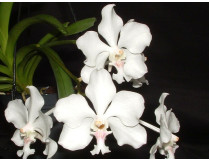
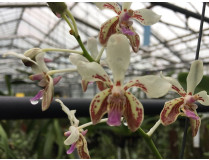
Vanda javierae
- flower season: winter - spring
- temperature: cool - moderate (12 - 18 °C)
- Mehr Details
Price*:
€29.90
Vanda lamellata (fast blühstark)
- flower season: spring
- temperature: warm (20 - 24 °C
- Mehr Details
Price*:
€27.90
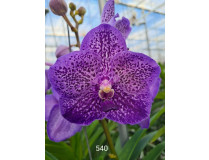
Vanda Lavender Sprinkles (in Knospe / Blüte)
- flower season: whole year
- temperature: warm (20 - 24 °C
- Mehr Details
Price*:
€42.90
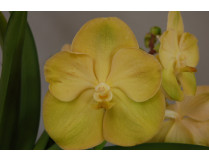
Vanda Lemon Gold (in Knospe / Blüte)
- flower season: whole year
- temperature: warm (20 - 24 °C
- Mehr Details
Price*:
€42.90
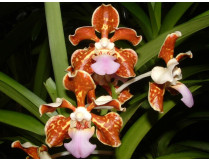
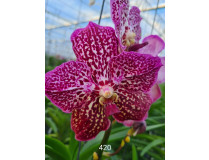
Vanda Lipstick (in Knospe / Blüte)
- flower season: whole year
- temperature: warm (20 - 24 °C
- Mehr Details
Price*:
€42.90
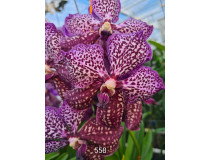
Vanda Magenta Glamour (in Knospe / Blüte)
- flower season: whole year
- temperature: warm (20 - 24 °C
- Mehr Details
Price*:
€42.90
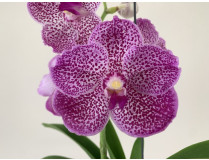
Vanda Mme Rattana A/M x Kasem's Delight (in Knospe/Blüte)
- flower season: whole year
- temperature: warm (20 - 24 °C
- Mehr Details
Price*:
€42.90
Vanda and Ascocenda have pronounced aerial roots that store large amounts of water. In contrast to other orchid species, these two genera must therefore be cultivated entirely without a substrate. They are therefore usually seen as hanging plants, but they also look good in glass vases or wooden baskets. If you decide in favour of a container - without a substrate - you should choose the exact size according to the volume of the aerial roots and clean it once or twice a year.
The advantage: the plants are very easy to water. Fill the container with water until all the roots are submerged without wetting the leaves. The orchid now needs about half an hour to replenish its water reserves. Then pour out the remaining water completely and make sure that no residual water remains in the leaf axils, as this will quickly lead to rotting.
As there is no moist substrate surrounding the roots, Vanda and Ascocenda need to be watered more frequently than other orchid representatives. Dip them twice a week or spray the aerial roots daily.
How often to fertilise Vanda orchids?
During the flowering period from March to November, they appreciate fertiliser in the water once a month. Only use special Vanda tillandsia fertiliser, as it meets the requirements of both species perfectly.
What temperature and light conditions does the Vanda orchid need?
Vanda and Ascocenda like it warm and humid, temperatures between 20 and 24 degrees Celsius and a relative humidity of 60 to 85 per cent are ideal.
They also need plenty of light, but prefer a semi-shaded spot because they quickly get sunburnt. A north-west facing window is the best place for them. If it is too dark, your Vanda will thrive, but flower formation will be inhibited.
In summer, when temperatures no longer fall below 15 degrees Celsius, they also feel at home in the garden. However, they need a semi-shady spot and an acclimatisation phase during which they can get used to the changed conditions. From March to November, Vanda and Ascocenda delight us with their beautiful flowers up to three times.
Once the flower stalk has withered and dried out, it can be safely cut off. They do not need a dormant period to produce flowers, but they do need good growing conditions: A bright location with warm temperatures and a sufficient supply of water and nutrients guarantees lush blooms.
 ... to newsletter subscription
 ... to see all economy sets
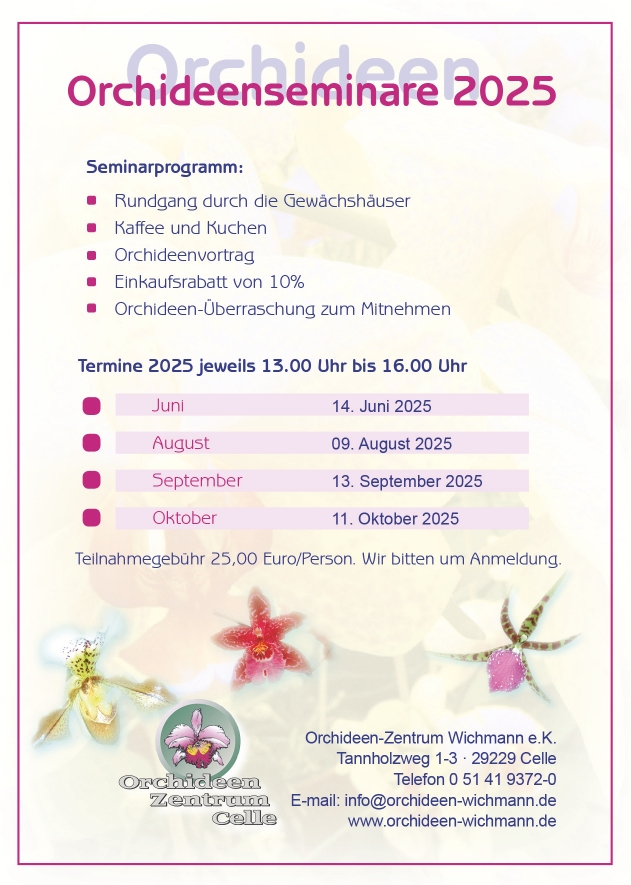
Orchideen-Zentrum Wichmann e.K.
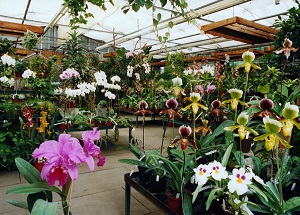
Orchideen-Gartencenter
Tannholzweg 1 - 3
29229 Celle - OT Groß Hehlen
info@orchideen-wichmann.de
| Mon | closed |
| Tue - Fri | 10 am - 5.pm |
| Sat | 10 am - 2 pm |
| So. | 10 am - 12 pm |
Free tour every first Sunday of the month at 10:00 am

News
Recently Viewed Products

Our Warranty
 |
 |
 |
 |