Skip to main content Skip to search Skip to main navigation
Go to homepage

Encyclia

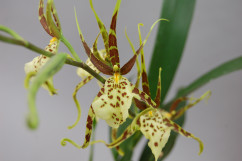
Close-up of a pale yellow orchid with purple-red stripes in the centre, surrounded by green leaves.

Filter products

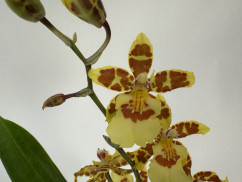
Close-up of five brown-burgundy and yellow orchids surrounded by elongated green leaves.
Encyclia cochleata

Regular price: €31.90
A pale yellow orchid with long, thin petals in the foreground, surrounded by green leaves and other plants in the background.
Encyclia cochleata 'alba'

Regular price: €32.90
Close-up of five brown-burgundy and yellow orchids surrounded by elongated green leaves.
Encyclia cochleata (annual)

Regular price: €15.90
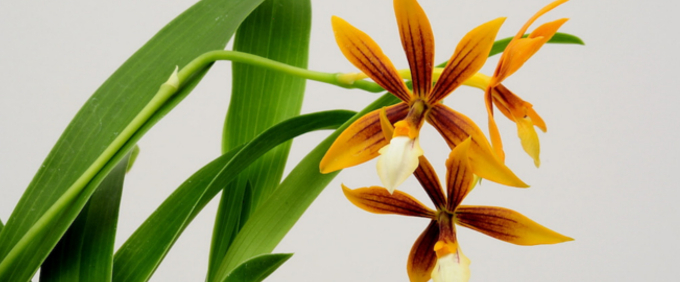
An orchid with yellow-green, brown-spotted petals and a burgundy lip with a yellow centre against a light grey background.
Encyclia cochleatum x prismatocarpum

Regular price: €18.90
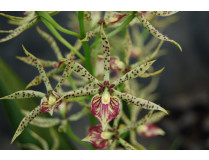
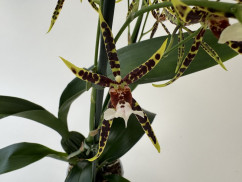
Close-up of star-shaped orchid flowers with long, light green petals speckled with dark red dots. In the centre of the flower is a calyx in burgundy red and yellow.
Encyclia cochleatum x prismatocarpum (young plant, freshly potted)

Regular price: €7.90
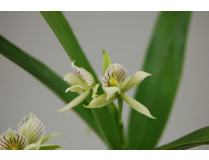
Close-up of an Encyclia fragrans orchid with long green leaves in the background. The petals are light green and white with fine brown stripes and yellow accents in the centre.
Encyclia fragrans

Regular price: €42.90
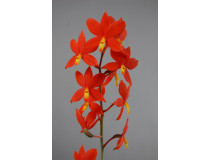
A close-up of an Encyclia vitellina, an orchid with bright red flowers and yellow accents growing on a slender green stem, against a grey background.
Encyclia vitellina

Regular price: €18.90
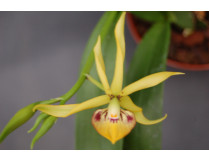
A yellow orchid flower with long, narrow petals and a heart-shaped lip with dark stripes. Green leaves and a flower pot in the background.
Encyclia vitellinum x cochleatum (1-2 stems)

Regular price: €21.90
Discount
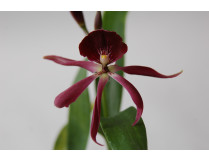
Close-up of a dark red orchid with long, thin petals in front of green foliage and a white background. The flower has a yellow accent in the centre.
Epicattleya Black Comet (in flower sheath)

Sale price: €18.90 Regular price: €24.90 (24% saved)
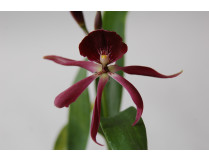
Close-up of a dark red orchid with long, thin petals in front of green foliage and a white background. The flower has a yellow accent in the centre.
Epicattleya Black Comet (yearling)

Regular price: €8.90
Discount
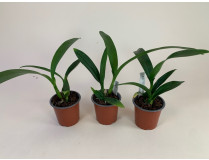
Three small plants with green leaves in brown pots against a white background.
Epicattleya Black Comet (young plants - economy pack of 3)

Sale price: €20.90 Regular price: €29.70 (29% saved)

SPECIAL BOTANICAL FEATURES AND NOTES FOR Encyclia

The orchid Encyclia is a fascinating genus within the orchid family (Orchidaceae), characterised by its diverse shapes, colours and adaptability. Here are some of the features that make this orchid so special. Encyclia is a rather drought-loving orchid and is therefore well suited for indoor cultivation in low humidity. Approx. 100 different species are found in this genus. Most species come from Mexico and the West Indies. However, there are also species growing as epiphytes in the subtropical regions of South America.

1. variety of flower shapes and colours
Flower structure: Encyclia orchids are known for their star-shaped flowers, which often have a characteristic "cap" above the labellum. The flowers usually have narrow sepals and petals, which give the plant an elegant and graceful appearance.

Variety of colours: The flowers come in a wide range of colours, including white, yellow, pink, purple and brown, often with contrasting markings or spots on the labellum. This variety makes them very attractive to collectors and growers.

Scent: Many Encyclia species are known for their pleasant fragrance, which can range from sweet to spicy and is often strongest in the early morning hours.

2. wide geographical distribution
Habitats: Encyclia orchids are mainly distributed throughout the tropical and subtropical regions of the Americas, from Florida to South America, including the Caribbean. This distribution shows their adaptability to different climatic conditions.

Versatile habitats: They are found in a variety of habitats, including dry forests, humid rainforests and even savannahs, which emphasises their ecological versatility.

3. adaptability and growing conditions
Epiphytic and lithophytic: Encyclia orchids often grow as epiphytes on trees, where they have access to light and humidity, or as lithophytes on rocks, where they can adapt to changing conditions.

Easy cultivation: These orchids are relatively easy to care for and adaptable, making them ideal for amateur gardeners and orchid collectors. They require bright, indirect light, good air circulation and regular watering, with the substrate allowed to dry out between waterings.

4. diversity of species
Species diversity: The genus Encyclia comprises around 160 species, each with their own unique characteristics and adaptations. This diversity offers collectors a wide range of shapes and colours.

Hybrids: Encyclia is often used in orchid breeding to create hybrids that combine the best characteristics of different species, such as improved flower colours, shapes and sizes.

5 Cultural importance and popularity
Popularity: Encyclia orchids are popular with orchid enthusiasts and collectors, not only for their beauty, but also for their relatively easy care requirements.

Exhibitions: They can often be found at orchid shows, where their unique flowers and fragrances are admired.

6 Ecological adaptations
Pollination: Encyclia orchids have developed various pollination mechanisms to attract specific pollinators. Some species attract pollinators through their scent, while others work through their showy flower colours and shapes.

Survival strategies: In times of drought, many Encyclia orchids can reduce their water intake and draw on stored nutrients in their pseudobulbs, which helps them survive in different environmental conditions.

Care tips for Encyclia orchids

1. light
Bright, indirect light: Encyclia orchids need plenty of light to grow well, but direct sunlight can burn the leaves. A position in an east or west facing window where they receive morning or late afternoon sunlight is ideal.

Additional lighting: In dimly lit environments, especially in winter, a plant lamp can be helpful to ensure sufficient light.

2. temperature

Warm temperatures: These orchids thrive best in temperatures between 18 and 30 degrees Celsius. They prefer warm days and slightly cooler nights, which corresponds to the natural conditions in their habitat.

Temperature differences: A difference in temperature between day and night promotes flowering. A difference of around 5-10 degrees Celsius is ideal.

3. humidity
Moderate to high humidity: Encyclia orchids prefer a humidity level of 50 to 70 %. In dry indoor areas, a humidifier or a tray with water and pebbles under the pot can help to increase the humidity.

Air circulation: Good air circulation is important to prevent disease. However, avoid strong draughts.

4. watering

Consistent moisture: Keep the substrate evenly moist, but not wet. Allow the substrate to dry slightly between waterings to prevent root rot.

Water quality: Use rainwater or distilled water if possible, as tap water often contains minerals that can be harmful.

Seasonal adaptation: Watering should be more frequent during the growing season (spring and summer) and reduced in winter.

5 Substrate and repotting

Suitable substrate: Use a well-drained orchid substrate, which can consist of bark, sphagnum moss and perlite or coconut fibres. This allows good drainage and aeration of the roots.

Repotting: Repotting should be done every 1-2 years, ideally in spring when new growth is visible. Remove dead or rotten roots and replace the old substrate.

6. fertilisation

Regular fertilisationUse a balanced orchid fertiliser (e.g. 20-20-20) every fortnight during the growing season. In autumn and winter, fertilisation can be reduced to once a month.

Diluted solutions: Use the fertiliser in diluted form, to about a quarter of the recommended concentration, to avoid root damage.

7. flowering period and care afterwards

Flowering time: Encyclia orchids usually flower in spring or summer. During flowering, the plants should continue to receive optimal conditions.

After flowering: Remove faded flower stems and reduce fertilisation to allow the plant to rest. Do not cut off green stems as they may flower again.

8. pest control

Regular inspection: Check the plant regularly for pests such as spider mites, mealybugs and scale insects. These can be removed using a damp cloth or a mild soap solution.

Natural remedies: In case of infestation, biological insecticides or neem oil can be used to control the pests.

9. cultural adaptations

Dormancy: Some Encyclia species have a dormant period in winter. During this time, watering should be reduced and fertilising stopped to prepare the plant for the next growing season.

Special species: Specific adaptations may be required depending on the species. It is helpful to be aware of the specific requirements of the species you are caring for.

The care of Encyclia orchids requires a certain amount of attention and understanding of their specific needs. Here is a brief care checklist:

Light: Bright, indirect light; use plant lamps if necessary.

Temperature: 18-30°C, with cooler nights to encourage flowering.

Humidity: 50-70%; use humidifier or pebble tray.

Watering: Keep evenly moist, but avoid waterlogging.

Substrate: Use a well-drained orchid substrate.

Fertilisation: Every fortnight during the growing season, less in winter.

Pest control: Regular inspection and natural control agents.

With these care tips, you can ensure that your Encyclia orchid stays healthy and impresses with its beautiful blooms. Good luck with your gardening!

Display options

Enlarge
%
Font size
px
Line height
Character spacing
px